

Rubber Tree Family Plant Care Guide
Your complete guide to nurturing thriving Rubber Tree Plants and their stunning varieties
Your Plant's Story
This stunning Ficus family represents some of the most beloved statement houseplants in the world - and for good reason! Whether you have the classic deep burgundy-green Elastica, the tri-color variegated Tineke, the robust green Robusta, or the lighter-toned Decora, each variety shares that same incredible air-purifying power and nearly indestructible spirit that makes them perfect for both beginners and experienced plant parents.
Each plant in your collection started as a cutting from one of our treasured mother plants in our greenhouse, carefully propagated until ready for its new home.
Popular Ficus Varieties & Their Special Magic:
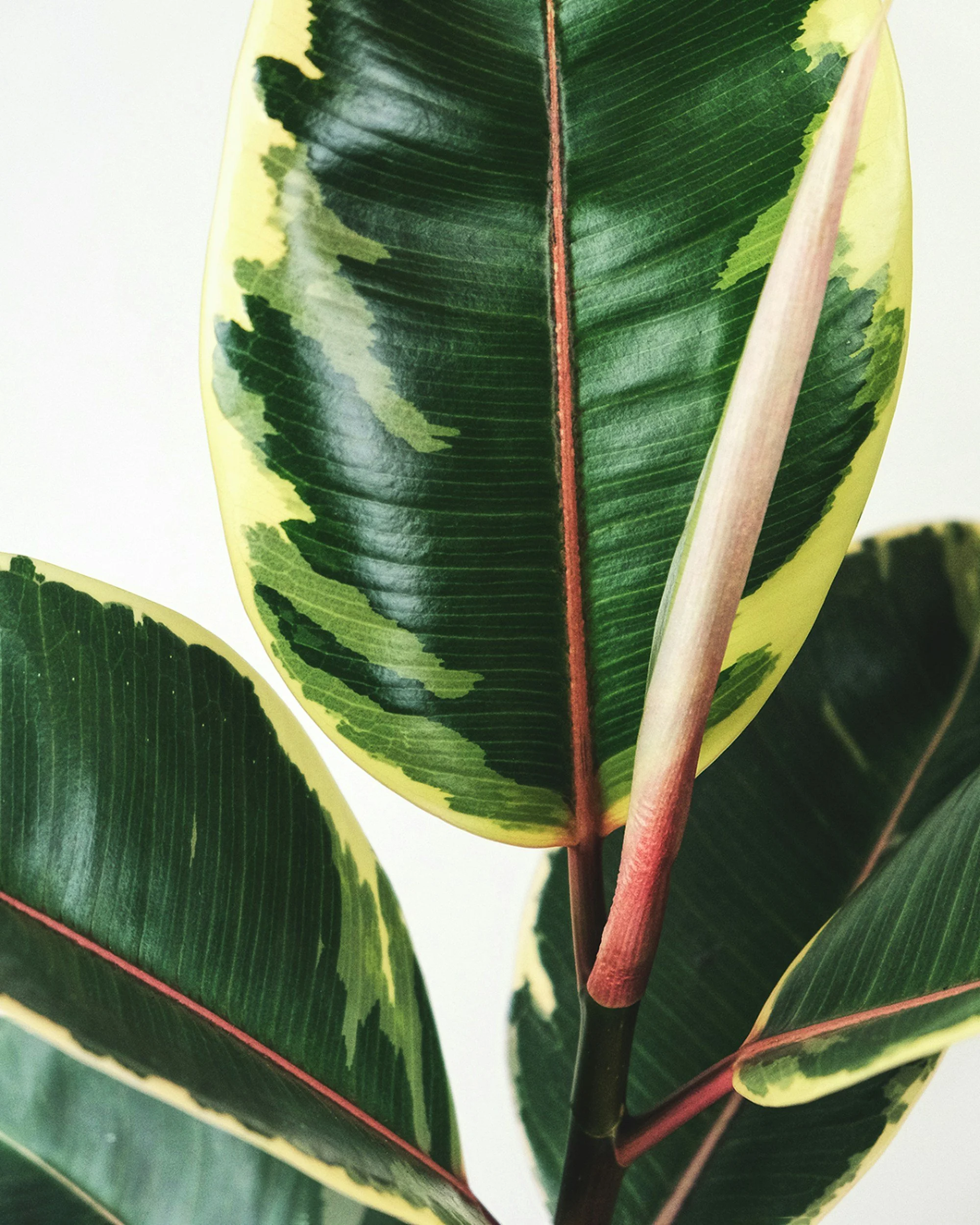
Ficus Elastica (Classic Burgundy) - Deep burgundy-green leaves with glossy perfection and timeless elegance
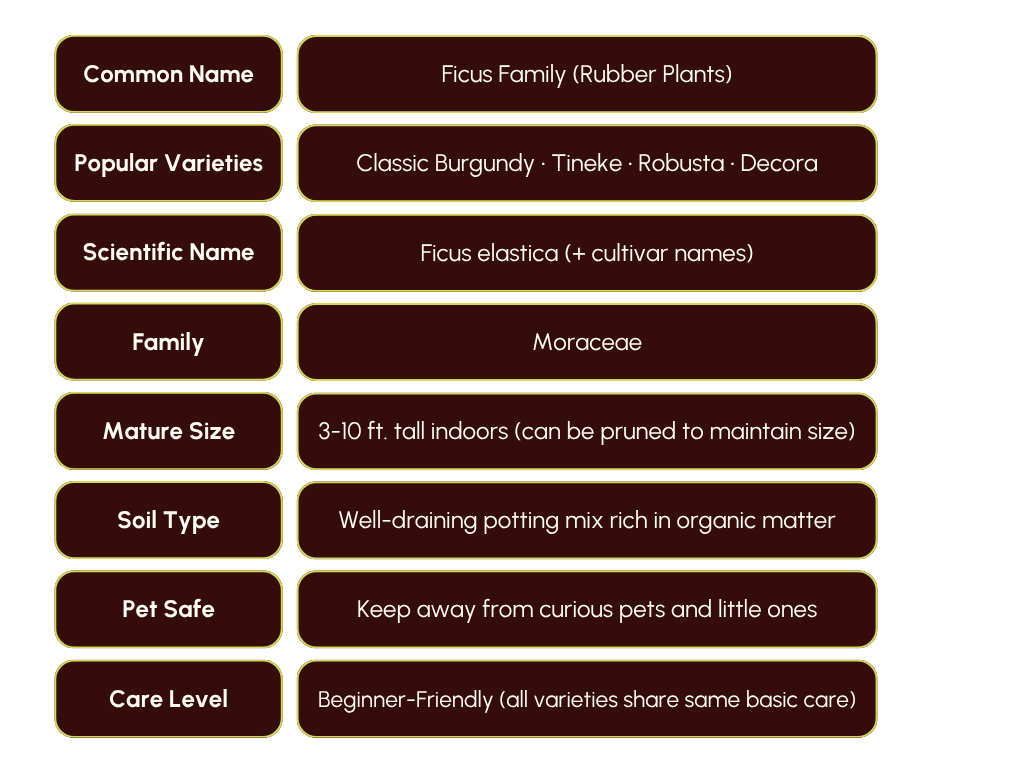
Ficus Tineke - Stunning tri-color variegation with green, cream, and pink edges that look hand-painted
Ficus Robusta - Large, glossy green leaves - the classic statement plant that never goes out of style
Ficus Decora - Similar to Burgundy but with lighter green tones and excellent adaptability
The Magic: While each variety has its own stunning personality, they all share the same incredible air-purifying abilities and nearly indestructible nature. There's something deeply satisfying about watching these beauties grow into living sculptures while actively cleaning your home's air - they're both gorgeous and functional!
From Indian forests to your space: Your Ficus's ancestors are native to India and Southeast Asia, where they develop into massive trees with aerial roots and can live for hundreds of years. They're natural air purifiers that evolved to thrive in various light conditions while maintaining their glossy, robust growth.
Hand-selected for you: Every Dirt Witch Ficus is chosen for its vibrant foliage (whether burgundy, variegated, or classic green), healthy growth tips, and that special resilient energy that makes them perfect for plant parents who want dramatic results with reliable care.
Plant Overview
At a glance
Pet Safe
Keep away from curious pets and little ones - the milky sap can be toxic if ingested
Bright Indirect Light
Thrives in bright, indirect light but can tolerate some direct morning sun - think cozy reading nook lighting
Beginner to Intermediate
Perfect for plant parents ready to grow a stunning statement tree with manageable care requirements
Essential Care
Light
Perfect placement: Bright, indirect light for 6+ hours daily - think "bright office space" or "well-lit living room without harsh sun"
Best spot: East-facing window for gentle morning light, or several feet back from south/west windows
Can handle some direct light: Unlike many houseplants, Ficus can tolerate some direct morning sun, but protect from intense afternoon rays
Avoid: Deep shade (causes leaf drop and leggy growth) or harsh all-day direct sun (can scorch leaves)
Light importance: Good light encourages faster growth, larger leaves, and more robust trunks
Flexibility: Can adapt to medium light but growth will slow significantly
Variety notes:
Tineke and other variegated types need bright light to maintain that gorgeous tri-color variegation
Classic Burgundy and Robusta are more tolerant of medium light conditions
All varieties can handle some direct morning sun but avoid harsh afternoon light
Watering
Finding the rhythm: Your Ficus will teach you the art of deep, infrequent watering - let the soil dry out between waterings, then give it a thorough drink
Spring/Summer: Every 1-2 weeks when actively growing and putting out those glossy new leaves
Fall/Winter: Every 2-3 weeks, as growth naturally slows and water needs decrease
Signs it needs water: Soil feels dry 1-2 inches down, leaves may look slightly less glossy
Signs of overwatering: Yellow leaves starting from the bottom, leaf drop, mushy stems, soil that stays soggy
Signs of underwatering: Dramatic leaf drop, very dry soil, leaves losing their glossy shine
Pro tip: Ficus prefer deep, thorough watering rather than frequent light watering - think tropical downpour followed by drying period!
Variety notes: All varieties follow the same watering schedule, but variegated types (Tineke) may show stress signs more quickly if overwatered - those colorful leaves are sensitive indicators of plant health!
Humidity
Creating the vibe: 40-60% humidity is ideal, but these adaptable beauties handle standard household humidity just fine
Easy ways to boost humidity (optional but appreciated):
Place in naturally humid rooms like kitchens or bright bathrooms
Group with other tropical plants for a mini forest effect
Use a pebble tray with water for gentle moisture boost
Light misting is okay but not necessary
Pro tip: Higher humidity encourages larger, more glossy leaves and can help prevent that dramatic leaf drop that sometimes happens with environmental changes
Variety notes: Tineke and variegated varieties appreciate slightly higher humidity for color intensity, but all varieties are adaptable to normal home conditions.
Temperature
Comfort zone: 65-85°F (basically comfortable room temperature - they're adaptable!)
Sweet spot: 70-80°F where they grow fastest and look most vibrant
Avoid: Cold drafts, sudden temperature changes, heating vents, anything below 60°F
Seasonal care: These prefer consistent temperatures year-round - they don't need a winter cooling period
Pro tip: Consistent temperatures prevent that dramatic leaf drop that can happen when Ficus get stressed!
Variety notes: All varieties prefer the same temperature range, with consistent warmth being key for maintaining health and preventing leaf drop.
Soil & Feeding
Soil: Well-draining potting mix with good organic content (standard houseplant soil works great)
Perfect drainage: Add perlite if your soil seems to stay soggy - these prefer to dry out between waterings
Feeding schedule:
Growing season (Spring/Summer): Monthly with balanced liquid fertilizer
Dormant season (Fall/Winter): Every 2-3 months or skip entirely
Fertilizer type: Balanced liquid fertilizer (10-10-10 or similar) at regular strength
Pro tip: Well-fed Ficus during growing season develop larger leaves, stronger trunks, and more robust root systems
Variety notes: Variegated varieties (Tineke) benefit from consistent feeding during growing season to maintain vibrant coloration and healthy variegation.
Monthly Care Ritual
Every month, create a moment to connect with your air-purifying friend:
Check soil moisture 1-2 inches down and water when dry (perfect time to admire each variety's unique leaf characteristics)
Inspect those glossy leaves for pests and dust buildup
Gently wipe leaves clean with damp cloth - they'll reward you with even more stunning shine and better air purification
Rotate pot 1/4 turn for even growth and balanced development
Remove any yellowing leaves and check for any signs of stress
Prune if needed to maintain size and encourage bushier growth
Growing season bonus ritual (Spring/Summer):
Offer balanced liquid fertilizer monthly to fuel dramatic growth
Consider pruning for shape and size control
Check if it needs repotting (every 2-3 years for these steady growers)
Variety-specific appreciation:
Burgundy: Admire that deep, rich coloration and glossy perfection
Tineke: Marvel at the tri-color variegation and pink edge development
Robusta: Appreciate the classic, timeless green beauty
Decora: Enjoy the lighter, softer green tones
Propagation & Repotting Magic
When Your Plant Needs More Space
Every 2-3 years, or when your statement plant starts sending you these signals:
Roots are growing out drainage holes like they're ready to expand
Growth has slowed despite good care and feeding
Water runs straight through without the soil absorbing
The plant has become top-heavy and unstable
Leaf size has decreased despite good light
Think of repotting as giving your air-purifying friend room to really develop into that stunning statement plant it's meant to be!
The Magic of Making More Plants
Best method: Stem cuttings (requires patience but very rewarding!)
There's something deeply satisfying about propagating Ficus because they develop into such substantial, long-lived plants! Here's how to work this glossy magic:
Stem cutting method:
Take 4-6 inch cuttings from healthy, semi-hardwood growth during spring/summer
Look for sections with 2-3 nodes and healthy, glossy leaves
Remove lower leaves that would sit in water
Place in water in bright, indirect light and change weekly
Be patient - roots can take 3-6 weeks to develop well
Plant when roots are 2+ inches long and branching
Keep soil consistently moist until well-established
Air layering method: For larger branches, this advanced technique works wonderfully
Variety notes: All varieties propagate identically, but variegated types (Tineke) may produce offspring with different variegation patterns - some more colorful, some less. It's part of the genetic lottery that makes collecting these varieties exciting!
Pro tip from one plant-obsessed person to another: Ficus propagation teaches patience and persistence - these substantial plants don't rush anything! While cuttings take longer than many houseplants, the satisfaction of growing your own statement plant from scratch is incredible. Your Ficus offspring can live for decades, becoming treasured plants that clean the air and bring beauty to homes for generations!
Common Visitors & How to Handle Them
-
The shine-stealing tiny thieves: These microscopic troublemakers love dry conditions and dusty leaves, making those glossy Ficus leaves look dull and stippled
Signs: Tiny webs between leaves, leaves losing their gorgeous shine, small moving dots on undersides
Treatment: Increase humidity immediately, wipe leaves with damp cloth weekly, neem oil spray thoroughly
Prevention: Regular leaf cleaning and adequate humidity keep these shine-stealers away
-
The white cotton leaf-droppers: These cottony invaders can stress Ficus plants enough to cause leaf drop
Signs: White, fluffy clusters where leaves meet stems, leaves may yellow and drop
Treatment: Dab with rubbing alcohol on a cotton swab, follow up with neem oil spray, monitor for new infestations
-
The glossy-leaf bumps: These hard-shelled pests attach to stems and leaf undersides, slowly draining plant energy
Signs: Hard, brown or tan bumps on stems that don't move when touched
Treatment: Gently scrape off with a soft brush or fingernail, alcohol treatment for stubborn ones
-
The leaf-scarring speed demons: These tiny pests leave silver scars on those beautiful glossy leaves
Signs: Silver or bronze streaks on leaves, tiny black specks (their waste), leaves looking dull
Treatment: Neem oil spray weekly, improve air circulation, remove damaged leaves
Pro tip: Healthy, well-cared-for Ficus plants rarely have serious pest issues. Most problems arise when plants are stressed from inconsistent watering or poor air circulation, so good basic care and regular leaf cleaning are your best prevention!
FAQ & Plant Wisdom
-
Leaf drop is the Ficus's dramatic way of responding to stress!
Common causes: overwatering, underwatering, temperature changes, moving locations, or seasonal light changes. Check your care routine and be patient - they often bounce back with consistent care.
-
Yellow leaf drop usually means overwatering or poor drainage!
Check if soil stays soggy for days after watering. Let it dry out more between waterings and ensure good drainage.
-
Your variegated Ficus is asking for more bright, indirect light!
Insufficient light causes variegated varieties to produce more green chlorophyll and less of those gorgeous cream and pink markings. Move to a brighter spot.
-
This usually means insufficient light and possibly lack of pruning!
Move to brighter light and consider pruning to encourage bushier growth. Ficus respond well to regular pruning and will develop fuller canopies.
-
Absolutely! These are among the best plants for pruning and shaping.
Regular pruning encourages bushier growth, maintains size, and helps create that perfect tree-like shape. Prune in spring for best results.
-
Yes, the milky sap is normal, but can be irritating!
Wear gloves when pruning or handling broken stems. The sap can cause skin irritation in sensitive people but isn't dangerous.
-
These are enthusiastic growers when happy!
Expect 1-2 feet of growth per year under good conditions. They can grow quite quickly in spring and summer, which is why regular pruning is often needed.
-
Yes, they love a summer vacation!
Gradually acclimate to outdoor conditions in a bright, protected spot. Bring inside before temperatures drop below 60°F
-
Some variation is normal, but if all new growth is green, it needs more light!
Variegated Ficus need bright light to maintain their special coloration. You can also prune back green sections to encourage more variegated growth.
-
Dull leaves usually mean they need cleaning or better humidity!
Regular gentle leaf cleaning restores that gorgeous shine. Low humidity or pest issues can also cause leaves to lose their glossy appearance.
Still need help?
Having trouble with your Rubber Tree? We are here to help!
Email us at hello@dirt-witch.com with photos of any issues
Send us a DM on Instagram @dirtwitch with your questions
Remember: Rubber Trees are some of the most rewarding houseplants you can grow. Whether you have one variety or collect them all, they want to grow into stunning statement plants that purify your air and bring natural beauty to your space.
They may be dramatic about changes (hello, leaf drop!), but with consistent care, they're incredibly loyal plants that can live for decades, becoming treasured family heirloom plants.